
Like all the photographers here, Sontier has previously worked extensively with film-based materials. Recently, his interest has turned to the material nature of digital images and tools. He works with digital tech and materials, as well as online found images. In this series he used very old phone cameras specifically for the formative digital nature of their imaging. Visually the images comment on the inability of early mobile phone technology to live up to the hyped nature of their cameras. The subject matter is apparently immaterial until you notice references to other photographers encapsulated in images, from Anna Atkins to Wolfgang Tillmans.
The stories contained here start with the mundane and quotidian but range across a series of experiments with reproduction, repetition, and the mysterious, all the while exploiting the visual signs of image degradation.
Through some of these, tonal inadequacy is explored; others interact with the blown-out luminosity that early sensors suffered from. Still others work with issues of how to show such images on larger screens – the rescaling done internally and that done intentionally by image-makers, attempting to keep artefacts to a minimum. Some images point to the 8 bit experiments of pixel art, where the nature of the pixel is fully on display. Others pointedly reference photography history in complex ways – in the Anna Atkins reproduction for instance, computer screen text is visible, implying that the image is screen-shotted from an online source. Not only is this a poor quality reproduction, it is a screenshot (from a digital archive), so there are references to early, mid (Sherry Levine) and late photography.
The use of cliché and photographic tropes such as cloud and natural forms, moody skies, and still lives is apparent. They are familiar in their representation, but the peculiarities of the capture device offer cracks in that veneer, and break down or extend that initial perception.
These camera-phones crunch the dynamic range, where anything approaching a highlight is thrown into stark white and shadow detail disappears into the grain of pixel dust. Detail gets stripped back, and so such cameras favour the smoothed out image, and Sontier makes use of this to abstract, allowing specular highlights to add to this abstraction. At the same time, some images remain complex. Enough detail is there that the eye almost adds what the camera has lost. At times, he emphasises the failures, deliberately including images made at night, which show up the most egregious failures of cameras like these. To emphasis these failures even more, some images have been printed and rescanned, others have been rescaled upwards, drawing the pixel into even more prominence.
Hito Steyerl’s influential essay “In Praise of the Poor Image” is a treatise embracing the networked, degraded nature of online images. What once were failures, smeared and obvious pixels, the banding of gradients, become a signifier of a certain aesthetic, one that photographers invested in the ‘fine print’ may back away from in horror. A certain type of artist, those immersed in the early days of the web when image compression was something that had to be lived with, grew to embrace and analyse this style (which resulted in outpourings of net-art and a visual glitch culture).
Sontier sees these signs of failure as just another part of the language, although he admits it takes a while to feel comfortable with jpg jaggies and colour banding after a decade of trying hard to avoid them.
Among many of the failings of these early phones, pixelation is the most obvious, caused by the compression necessary to fit a usable number of images on the low storage capacity available. Other restrictive elements are the necessarily wide focus of the lens coupled with its small light-catching capacity. Thus even in moderately diminishing lighting, image clarity is lost and shadows quickly go muddy or are filled with noise. At the other end, too much dynamic range (and it does not take that much) blows out highlights in a very particular digital way. Much like the characteristic nature of particular film stock (the look of Kodachrome for instance, or early Polaroid), specific era digital images can be distinguished.
In the metadata for some images we can see that the classic Nokia 5130 (2009) is one of the phone cams used.
[META DATA for cams]
In two heavily pixelated images, the metadata tells us an even older camera was in use – the Nokia 6230 from 2003. The device had very low memory and could save in ‘normal’ mode (480 x 640 px) or memory-saving mode which produced images at a resolution of 80 x 96 pixels. At this size the picture was only of use on the tiny in-built screen but Sontier has repurposed it here, delighting in the very obvious pixels that hint at blur and gradient.
Long ago, the Samsung GT-N7100 (2012), one of the other cameras in use, was a highly regarded media device. In one image, this device is pictured in what is possibly its last use, with shattered screen elements. At this point it becomes clearer that we are being toyed with though, since how can the phone take an image of its own demise? (A screen capture would not show the physicality of its own cracked screen). Sontier has edited the metadata knowingly, expecting it to become part of the story of the image, and so creating a paradox in that information.
These images refer to their own disintegration, through deliberate use of technologies that promised more than they could produce, to their own passage into the mechanistic, ethereal realm of the poor image. They reference the positivist hype of much technology, the hard sell techniques of marketers that lead to acquisitive fan-boy antics and quickly obsolescent devices. As such they continue a key theme that Sontier, a one-time organiser of Buy Nothing Day in Auckland, references in his work. That is, the waste and overconsumption of modern Western society and the resulting downgrading of natural ecosystems.
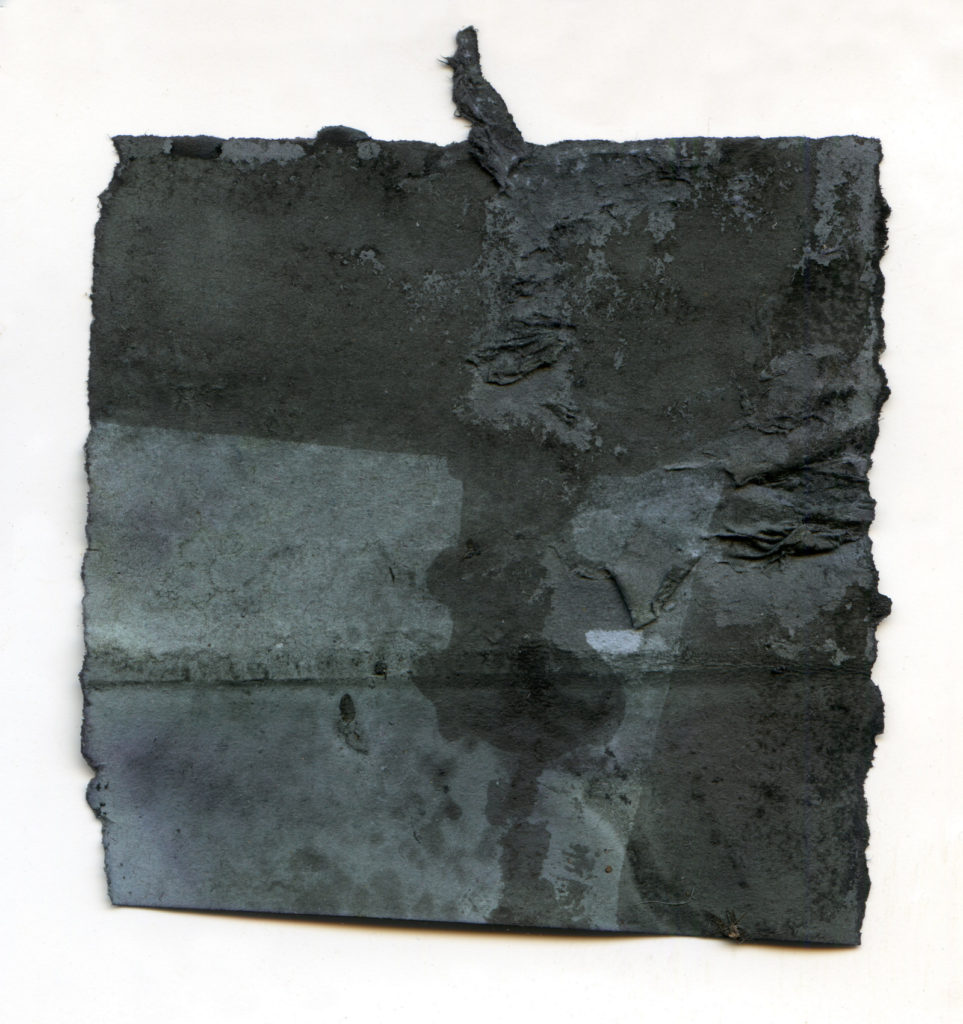
https://versum.xyz/token/versum/1577
Since making the work in Circumstantial Evidence, Sontier has expanded his interest in waste by working with faulty inkjet printers, waste inkjet papers and inks. He explores virtual spaces including web-based exhibiting and NFTs as alternatives to expensive and wasteful physical exhibitions.
NFTs have polarised artists and environmentalists alike, but Sontier notes that the landscape is much more complicated than most critics acknowledge. For instance, the major platforms use Proof of Work blockchains that do rely on vast and hugely wasteful computing power, but many environmentally-concerned artists have found their way to much cleaner platforms that use Proof of Stake, where energy-use is thousands of times lower.
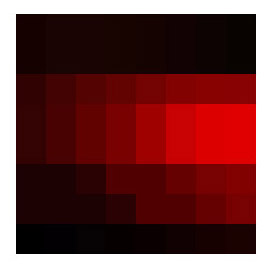
https://www.8bidou.com/item_detail/?id=4461
Sontier explains that many experimental artists congregated on Tezos-based hicetnunc in 2021 and new platforms continue to emerge. He is active in teia.art development and mints there, as well as on versum and 8bidou. Intriguingly, 8bidou.com exclusively mints 8 bit works – often termed pixel art. The platform currently hosts 8×8 and 24×24 pixel works. His work there predominantly takes the idea of downscaling of image quality to the absurd level of 8 pixels square, where the pixel and its adjacent neighbours assume much more importance in a work.
One could argue that 64 pixels is so reductive that any notion of reality or evidence has been lost. But it is clear that artistic style is still evident, even effusive. Some digital-based artists have been producing work in low-res formats for decades and there is a burgeoning output of animated gif works (which Sontier also occasionally works in) on Tezos platforms that startles one into realising that an authentic experience is happening in digital spaces that is as real as any offline experience.
In both Carapiet’s and Sontier’s works, the images have been resolved through a transmission strategy – Carapiet’s through TV networks mediated by signal strength, Sontier’s through the electronic limitations of the sensor and technical and price decisions of phone manufacturers. Both sets of images were created and worked on during the 2020 lockdowns in Auckland, Aotearoa/New Zealand. Sontier’s are not meant as documentation of those times in any detailed way, but many of the titles refer to the time in lockdown and are suffused with that weird altered state of reality.
While technology moves rapidly forward, cameras become more sophisticated and computational photography promises to essentially perfect the expected photographic output, this work and Carapiet’s are almost examples of anti-computational photography, where the device still modifies the image, at times significantly, but in a way that decreases information. The works question where both photography and representation are going, when the ability to create fictitious realities and fake evidence is upon us.
Stu Sontier was born in England, and has lived in New Zealand since the age of 8. He has worked with traditional silver gelatin printing in an extended documentary tradition and has been an active committee member of PhotoForum for many years. Following a break which included raising his son and reassessing the personal importance of photography, he now works in a more experimental way, exploring interests in photographic materiality, failing technology and compromised ecologies.
He is currently investigating digital space and cleanNFTs as a presentational form via teia.art and versum.xyz as well as presenting work in online spaces and websites.