
In Circumstantial Evidence, Jon Carapiet continues a long-form look at contemporary issues, as seen through global media. This time he directly addresses the coverage of the 2020 global covid virus, from the time of “4 new deaths in China” through the various plays the media concentrated on, to “almost 100,000 deaths in the US”, a span of about three months.
On the surface, we are faced with visual facts. News readers, news makers, the incessant text-tickers and reluctant, unintended participants in coverage. But Carapiet layers this and similarly to Sontiers’ focus, channels Hito Steyerl’s ‘poor image’ through low tech methods and provocative inclusion of defects. He allows the nature of capture to leak through, a step back into the process so that it becomes part of the story.
The images are full of a tension that is not easily definable, until one steps back to acknowledge that imperfections are as much the story as the ostensible media content. The screencaps, already distorted by stretching and skewing camera angles, are covered with a digital virus. The moiré patterns created from digital capture of digital broadcasts, the scanlines and pixels of screens. The mottled patterns remind us of the screen-based delivery of information, and also of the dangerous nature of just being alive at this time.
Rather than a story about covid in the normal sense, this is a tearing apart of the narrative machine. A look at how an emergency is translated to screen and then to our own perception.
There are direct comments on such things as the use / non-use of masks, but these may be post-facto, where just the sight of a masked leader triggers our own memory of the debates. There are indirect comments about the media and the ‘white-blind’ nature of its coverage. We see white commentators talking about a far-off problem, at least at the start of the coverage. China became the ‘other’ in this narrative – we looked on as the virus took hold there, somehow assuming that it would only affect Chinese and so there was no need to prepare, unaware that it could reach across this often inaccessible cultural barrier to slap us.
Carapiet draws attention to this cultural closeting (so often the form of Western reporting) by the fading image of a distressed, untidy girl, followed by a similar image of people in what appears to be a shanty. These images contrast with most of the others, in having the context removed and the content blurring, in the way that news from ‘poorer’ countries tends to blur and be taken as irrelevant to our own circumstances. Normally these images would drift by, but here they sit uncomfortably alongside the mostly white news presenters and the inclusion of the cultural icon of Micky Mouse. The impact of covid in western countries as been heavily documented, captured, discussed. In the global South, much goes unsaid and undocumented. Leaders become stand-ins for their whole nation’s complex issues. Bolsonaro, and his mirroring of Trumps chloroquine cure become a signifier for all of Brazil’s problems. Xi Jinping, head bowed and maskless, for the traumas that ordinary Chinese suffered. In several images, hands are held in notation, supplication, explication, and then, over the heart, in feigned concern.
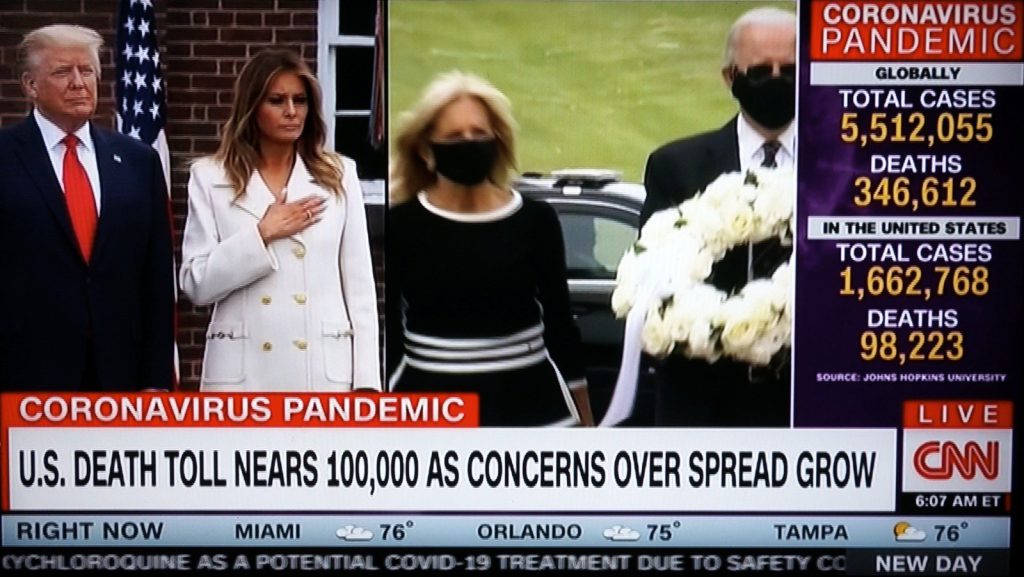
There is a sonic quality that sits alongside these images. A low unsettling hum. A high pitched tension that leaks through the edges of distress. The moirés create a modulation expanding to wah-wah detuning in the images, where faces are lined with crazy-paint or reduced to static rhythm, dappled with viral blotches.

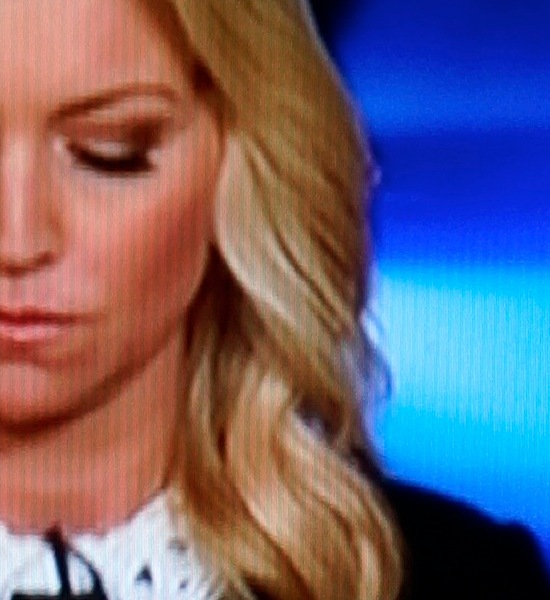
The effect is of an 80’s pop tune simultaneously overlaid with the multiphonal clangour of a Charles Ives piece. Marching bands captured at random street corners, a faint mariachi band seeking its own voice. In some ways the sound of a culture going about its life, one that was already perhaps circumscribed by other crises. A life that has been confronted and reminded that it is not unique, protected or infinite, Parts struggling to forget, helped in some cases by those leaders. Other parts, more selfless, more open to the prospect of death.
Carapiet’s work can also be seen as a play on ‘nothing’. Composer John Cage is regularly quoted from his Essay on Nothing “… I have nothing to say, and I’m saying it, and that is poetry as I need it”. Cage saw the noise of the everyday as being as important as composed rhythm and tone, the day to day sounds focussing attention on the world around, giving the ability to step back. His seminal ‘silent’ work 4’33” allowed for a meditation on the ephemeral, where the surrounding sounds became the content, like a meta narrative about the everyday.
Here the images dwell on a meta narrative around the media, based on its covid coverage – the unsaid tensions, the political structures, the biases, the unstated. His images capture fleeting moments, unrepeatable on the screen as the events themselves are unrepeatable.
The images of all these photographers perhaps do the same, in their own variety of ways. Their ‘evidence’ acts as the focussing of introspection, not just on the supposed content of the images but on their wider context.
Jon Carapiet is of Anglo-Armenian heritage and grew up in England, moving to New Zealand in 1992. His career includes a wide range of experience in photography, commercial market research, community advocacy, writing and broadcasting. Jon’s work explores humanitarian and global themes and the impact of technology Photo-installations include Headlines (1994), istory (1995), Forgivenness (1998), STOMP (2017) and Rain Fade (2019).