
Sameshima’s set of eight images for Circumstantial Evidence extends the idea of documentation to the multiple. We see a series of long exposure views of a wilderness with milky water from slightly different viewpoints, each adding something to an extensible story.
Long exposure views of a wilderness with milky water, from slightly different viewpoints each add something to an extensible story. A tree branch that was initially peripheral, A branch that was initially peripheral wheels into view with the potential to upend us. The water surges as if trying to engulf the photographer. The light in each subtly changes until it appears to flash out with infra-red presence. What was initially perhaps a single majestic landscape, wraps itself around us, creating a mystery, extending our connection with the possible reality that was in effect. We clamber back from the incoming waters, on uneven ground and uncooperative branches, our eyes pausing at times still trying to focus on the world in frontal view. The landscape is bigger than us and uninterested in the importance of our presence.
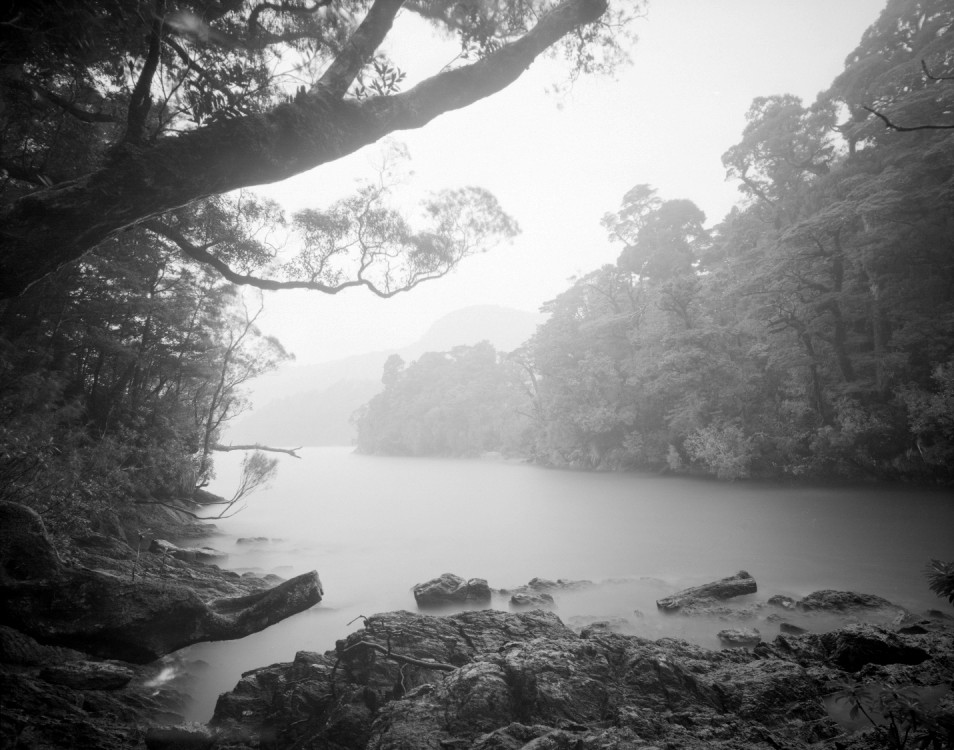
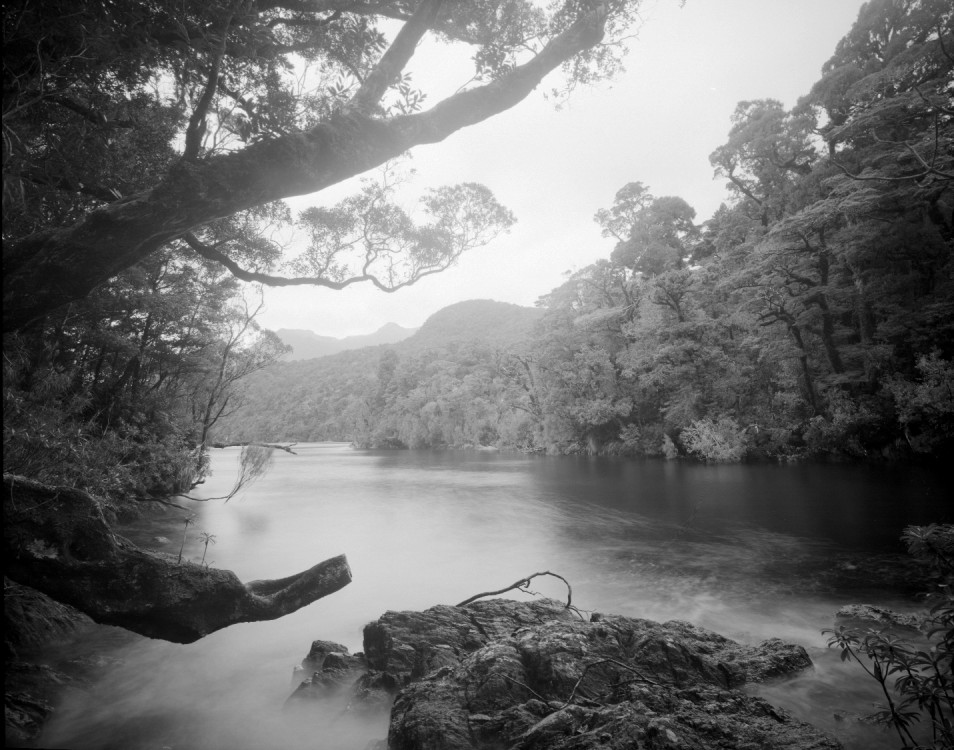
Sameshima informs that he was photographing in Dusky Sound, Fiordland in the South Island with an 8×10 camera on tripod for two days. The incoming tide caused him to have to relocate several times.
These pictures were made 26 years ago in 1995 taken on a large format camera and the negatives scanned in 1999 on a Umax scanner. With what was then high end technology, the scans produced digital images 1000 pixels wide to save space on the iMac hard drive. The lights have washed out, the blacks faded but the magic of the large negative comes out in the detail that still occurs in the midtones. Even at a moderate magnification we can see how the scanner output has compressed the information into digitised jaggies, but on a monitor, at viewing size, the images have solidity at the same time as they are melting away. They show the ghosts of a place, over a short time. A place that held the photographer even as it tried to repel him.
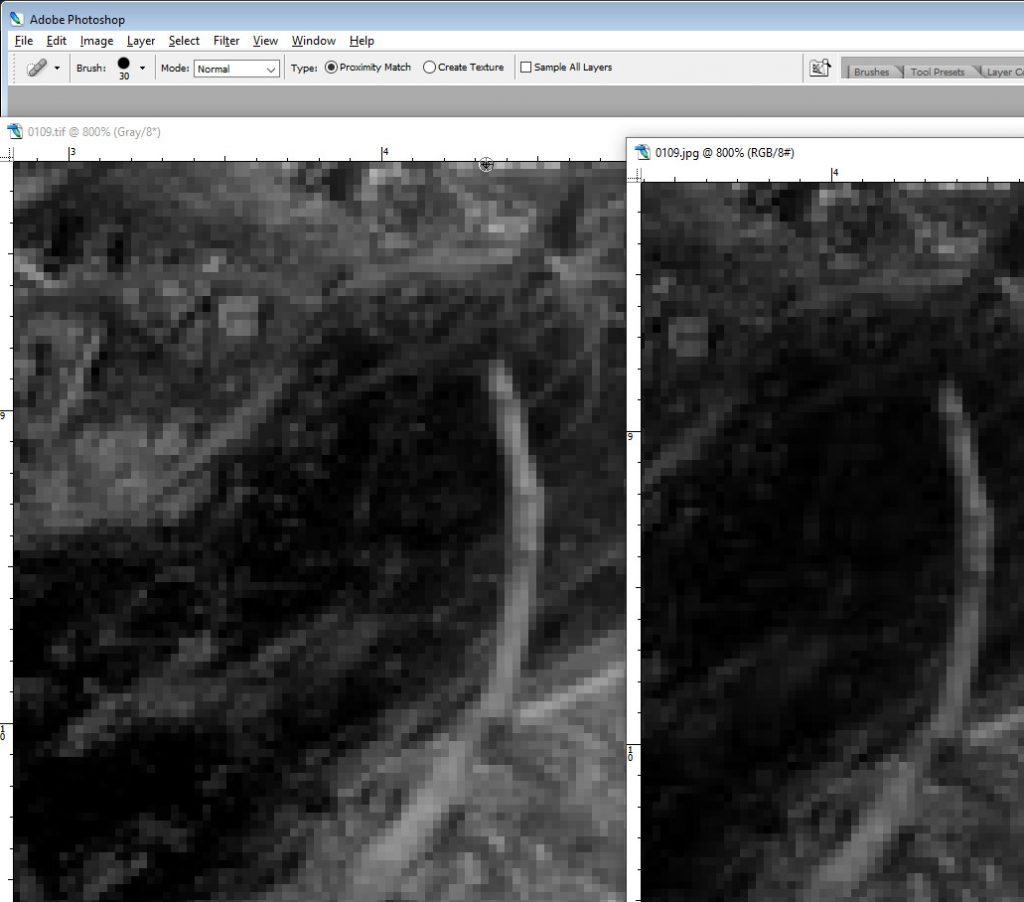 800% magnification of 0109 in jpg and tif formats
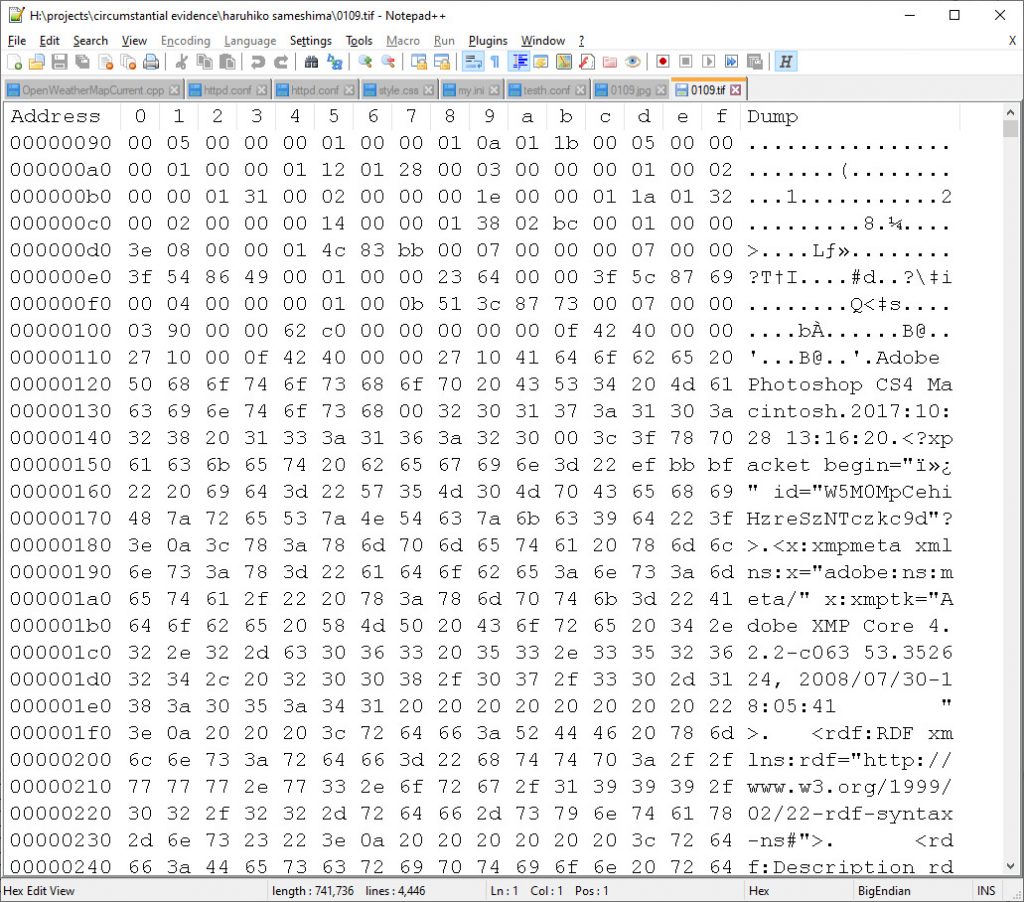 Hex file dump of the start of 0109.tif
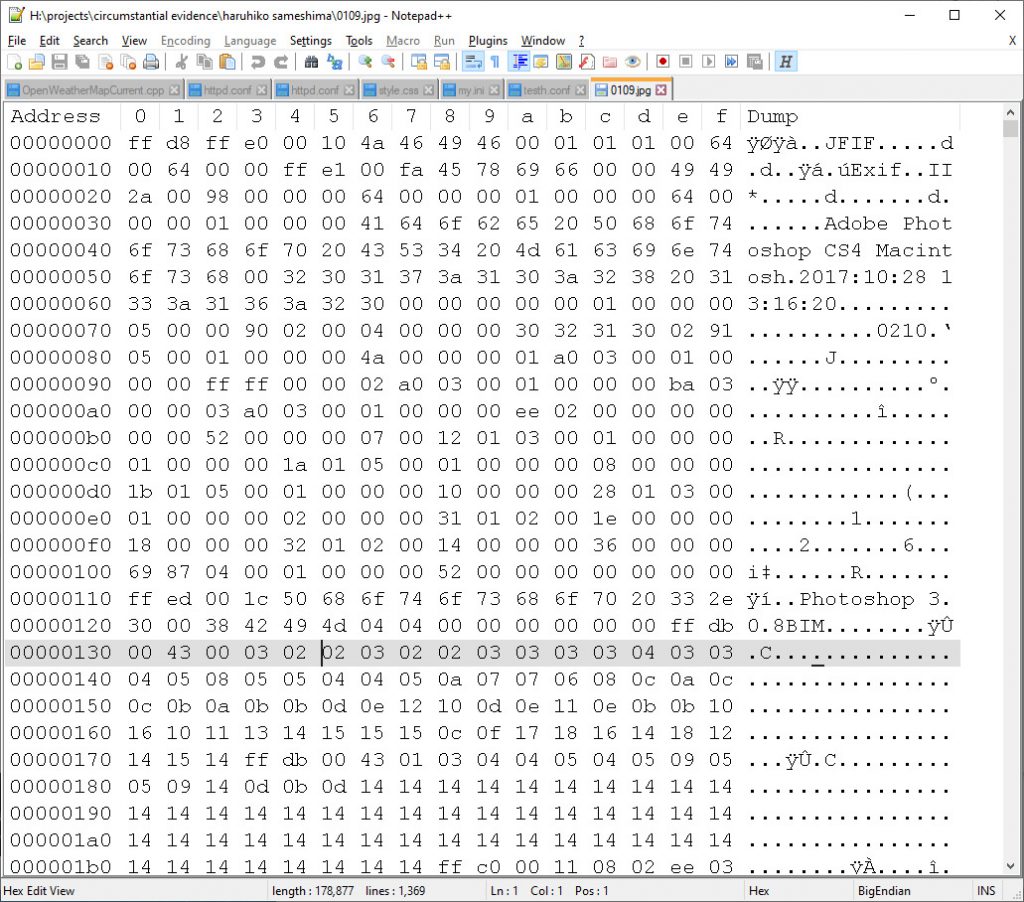 Hex file dump of the start of 0109.jpg
It would be a fascinating exercise to rescan from the original negatives with a more current scanner in order to compare changes in technology (and operator skills), but this would be a technical adventure that tells another story. This story might include the information told by the image metadata – that on the 28th Oct 2017 (and at 1.28pm, all assuming the computer time was accurate) the image was processed by Photoshop CS4 on a mac. This metadata might reference some reworking of the images but it indicates how evidence can be lost over time.
The digital back-story of an image might be of interest to a historian, biographer, a future climate scientist researching tidal heights (if the capture date is also available to them too). The images show rock forms and vegetation, tree cover, of use to geologists or biologists of the future. They might also tell a story about photography – the angle of view can be computed, the tonal range, shutter speeds (not recorded by a vintage 8×10 camera but analysed by looking at blur detail) the quirky nature of that particular scanner driver software and Photoshop’s compression algorithm in 2017.
Those are stories that were not the photographer’s first intention but are there for observers with different agendas. As images date, they may be mined for information in many ways.
Sameshima’s capture of detail and its transformation, initially through the scanner, through the process that caused him to consider and select these images to show us, and the subsequent recontextualising in a show that talks about relative truths and about displaying work online, are the more interesting story of these images here. The power of images to move, mirrored by the physical movement of the camera, are the final words in this set of images.
Haruhiko Sameshima is a photographer, artist, image editor, publisher, and occasional writer on photography. Bold Centuries: a photographic history album (Rim Books, 2009), and the photo essay ‘The Shopping Mall as a place of contemplation’, published in New Zealand – By the Way: Immigrant photographers & Photographs of Immigrants (Jenner Zimmermann 1996) best represent his interest in photography as a means of making sense of his travels.